The Georgia Special Session has concluded, with property tax-for-sales tax measures failing but an election overhaul passing on the final day Tuesday.
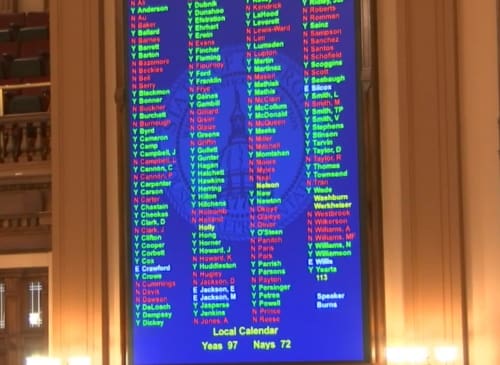
Access North Georgia spoke to local legislators, State House Representative for District 106 Akbar Ali (D-Lawrenceville) and State Senator for District 50 Bo Hatchett (R-Cornelia), to get updates.
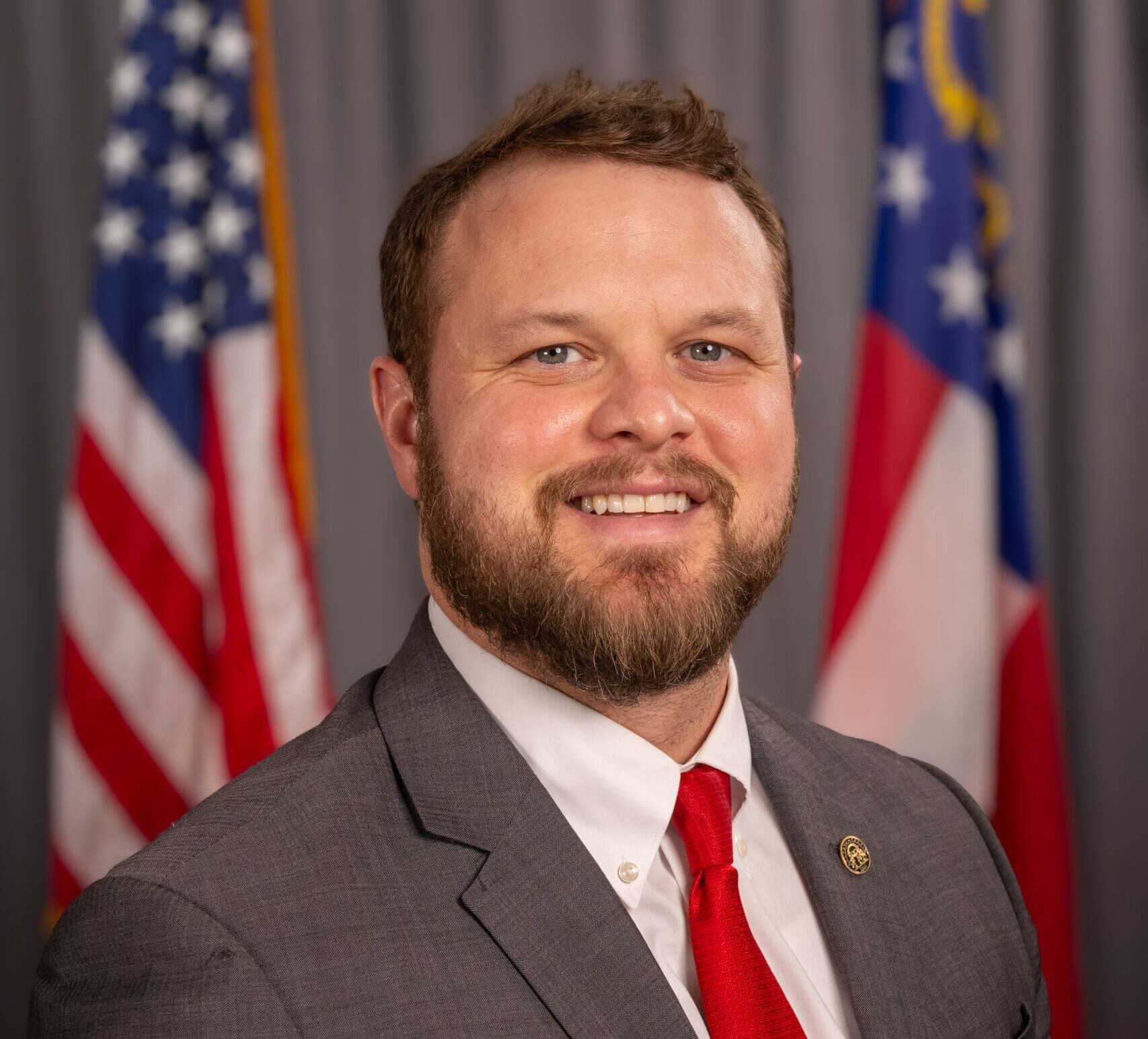
State Senator Bo Hatchett (R-Cornelia)
Property tax elimination fails, regressive tax debate ensues
Needing a two-thirds majority for property tax relief on a county-by-county (or municipality-by-municipality) basis, not a single property tax-for-sales tax measure passed.
"We don't believe in new taxes for folks, especially if it means more sales taxes, which is the most regressive form of tax within our state at the moment," Ali told Access North Georgia. "[The property tax elimination] will end up hurting disproportionately people of lower income, but also be a lot more expensive to families during a massive affordability crisis in Georgia."

State Representative Akbar Ali (D-Lawrenceville)
Ali pointed to alternative means to reduce property taxes, like the homeowner property tax relief grants that passed. That measure caps property tax assessments at the rate of inflation.
Critics call a property tax-for-sales tax "regressive" as opposed to income or property taxes, since lower-income residents spend a greater percentage of their income on daily essentials.
Hatchett provided an alternative perspective, saying he was "disappointed." He proposed legislation that would have given Stephens County property tax relief.
"This was simply a bill that would allow the people of Stephens County to decide whether or not to get property tax relief," Hatchett told Access North Georgia.
Hatchett claimed that afterwards, Democrats in the State Senate came up to him and said they wanted to vote with them, but told him they had "gotten instructions" to not do so.
Property tax relief timeline
It is important to note that Senate Bill (SB) 33, which passed earlier this year, is the enacting legislation that sought to put a 1% Local Homestead Option Sales Tax (LHOST) up for referendum votes by taxable district.
Those are where the dozens of individual county and city LHOST bills came from.
That differs from the 2024 House Bill (HB) 581 that allowed municipalities to opt in to the Floating Local Option Sales Tax (FLOST), also capping property assessments at the rate of inflation. The primary difference is that FLOST spreads out the relief, whereas LHOST gets relief to homestead properties first.
Ali added that property tax relief should be in place for Georgians this year, and also gave an alternative idea to bring home prices down, especially for younger people and first-time homebuyers.
"When it comes to renting and when it comes to buying a new property, especially for the younger generation that are looking to get the idea of the American dream and home ownership, the main strategy that I've seen is tackling investor-owned housing," Ali said.
Hatchett pushed back on the claims of sales tax being more regressive, at least for rural communities.
"I think that is just an example of how they don't understand rural Georgia. They are used to living in metro-Atlanta, where a large majority of the people are renters," Hatchett said. "I believe that they just denied people the chance to vote on something that would have made a real impact locally."
Hand counting votes comes into focus as QR code deadline drew near
Due to legislation passed in 2024, a deadline to start removing the QR code was set for July 1 of this year.
They pushed the deadline to make changes until 2028 in SB 3EX that lawmakers passed on Tuesday. The bill also requires hand-counting of certain statewide elections.
The statewide elections that are subject to hand-counting after the House made changes to the bill include governor, lieutenant governor, attorney general and secretary of state. Only the top two contests on a ballot would be hand-counted if the margin of victory is within a half percentage point.
"We had to push out the date to eliminate the QR codes, but we did put in hand recount to hopefully help with voter confidence, and those recounts would occur prior to certification, and we also established a committee that would be looking at other voting systems ... that could be implemented as soon as next year," Hatchett said.
State Representative for District 108, Dr. Jasmine Clark (D-Lilburn), spoke at the well on the House floor about the bill Tuesday, citing recent measures in Texas that were rolled back at the county level due to budgetary and logistical hurdles.
"Texas, just in 2024, they had arithmetic errors where the number of ballots cast did not equal the number of ballots counted, or each person counting got a completely different number than the person sitting next to them," Clark said. "We are here doing this instead of doing the things that Georgians actually really wish that we would be doing. We're not lowering grocery bills, we're not lowering gas prices, we're not helping families afford their rent, or their childcare, or their health care."
Ali echoed Clark's concerns, calling hand counting "inefficient."
"[Hand counting is] wildly inefficient, lots of money that is going to be spent, and also a lot of inaccuracies that are prone to happen," Ali said.
Sine Die
The 2026 special session has adjourned in both chambers, failing to pass property tax relief and redistricted maps. They succeeded in delaying the QR code deadline for ballot counting.
19 people arrested after drug bust in Jackson County
5:44 pm ON June 23, 2026
Funeral services scheduled for local radio icon Martha Zoller
4:50 pm ON June 23, 2026